





What changed
Quiet luxury — the term that started in fashion around 2022 with The Row, Loro Piana, and a turn away from logo-driven status — has reshaped how the wealthiest SoCal homeowners are designing their kitchens in 2026. The flash is gone. The Instagram-bait pendant lights are gone. The dramatic colored islands are gone.
What replaced them: kitchens that look like they cost less than they did, made of materials that age better than they photograph, designed for the people who use them rather than the people who'll see photos.
If you're planning a kitchen at the premium tier, the design vocabulary has shifted. Here's the new vocabulary.
Principle 1: Real materials, visible
Quiet luxury kitchens use real wood with visible grain, real stone with visible veining, real metal with patina. Not laminate that looks like wood. Not engineered slabs printed to look like marble. Not powder-coated metal pretending to be brass.
The shift is partly aesthetic, partly about the kind of person who can afford either choice deciding to make the more expensive one for reasons other than show. White oak rift-cut cabinetry tells a different story than a perfect lacquered painted door. Both can be beautiful. Only one whispers.
Principle 2: Restraint with material count
The 2018-2022 high-end kitchen often had four materials in the visible field: painted cabinets, contrasting island, marble counters, brass hardware. Sometimes five with a different backsplash.
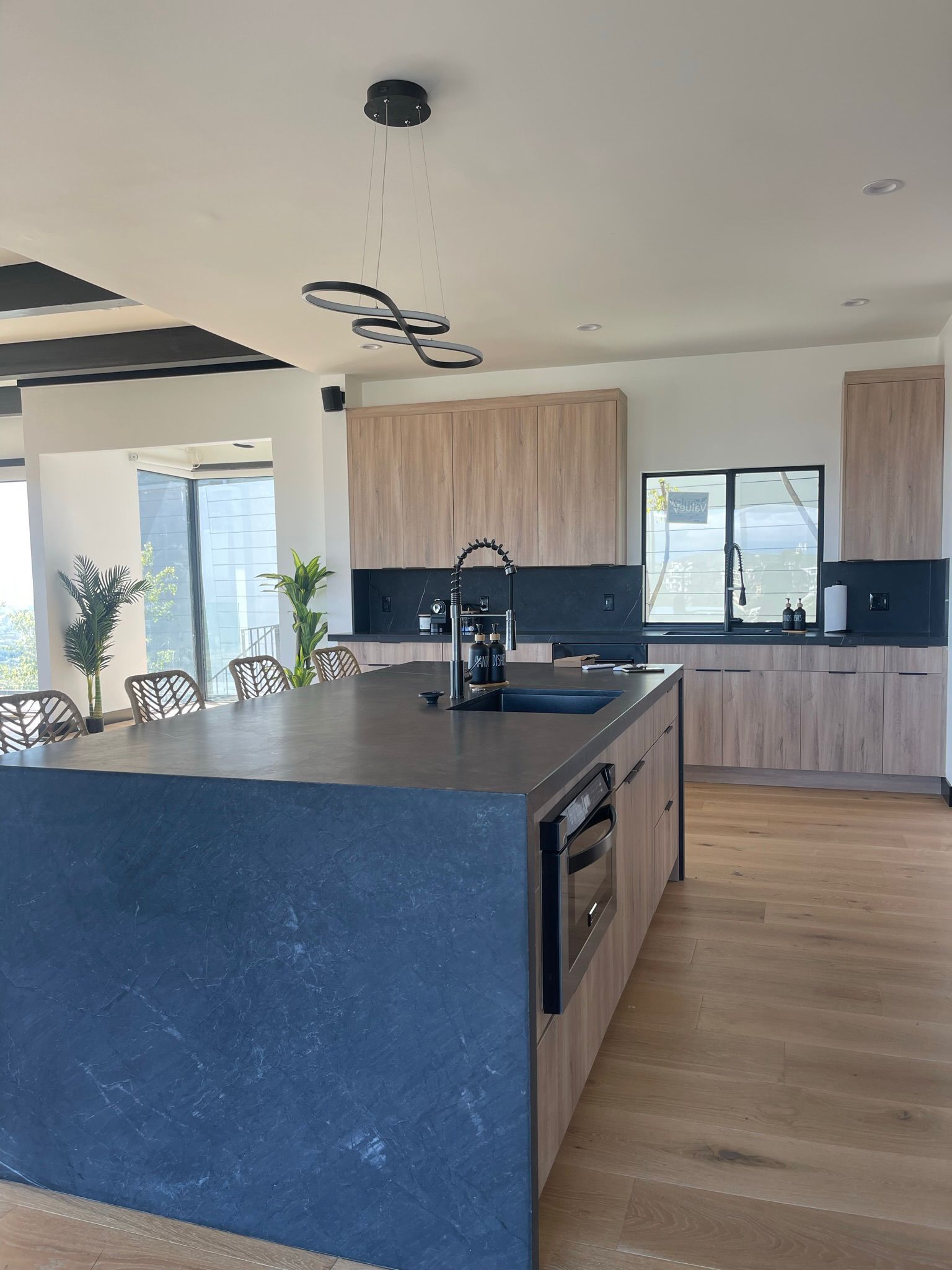
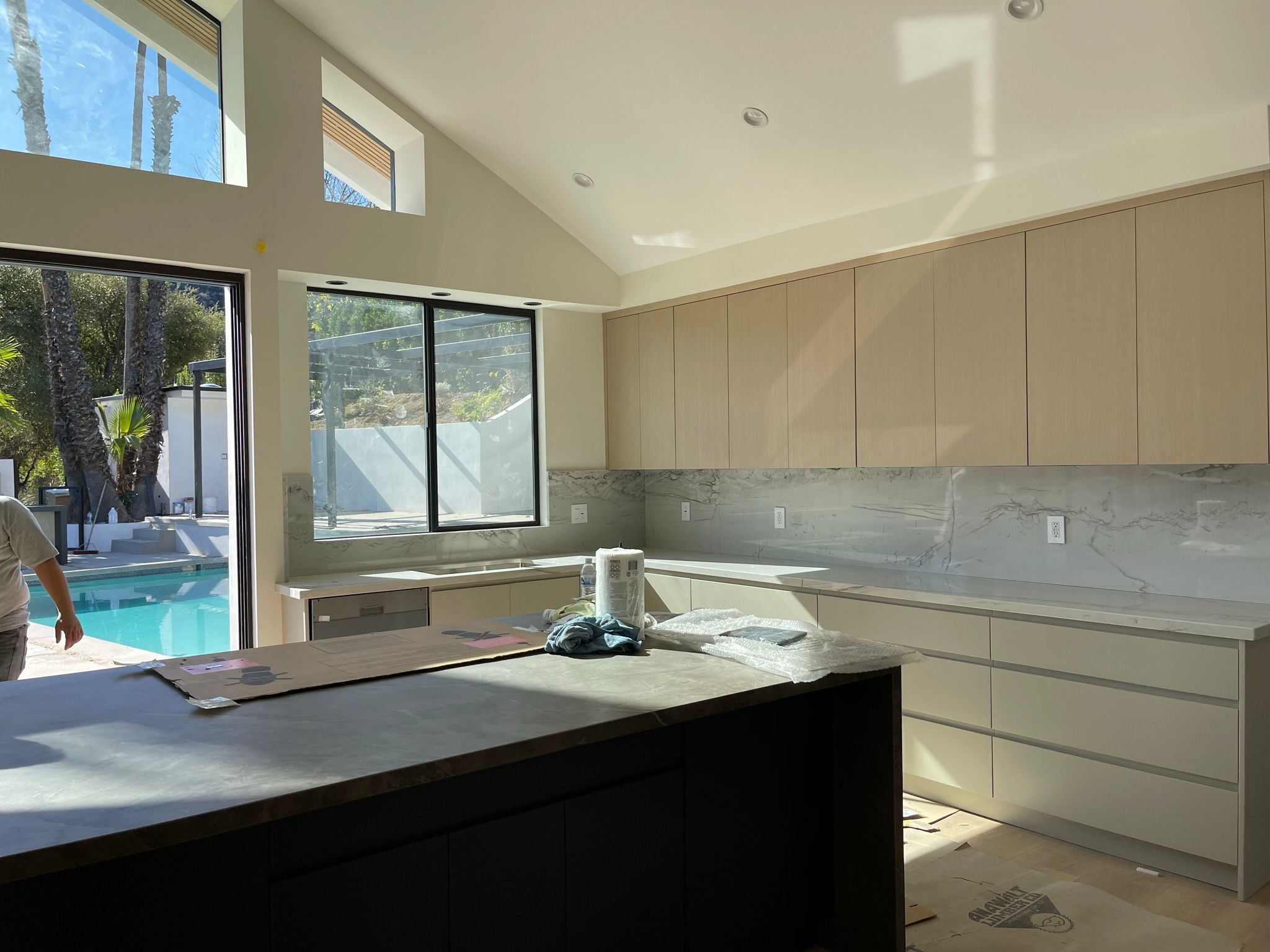
The 2026 quiet luxury kitchen typically uses two or three materials, used in larger expanses. White oak cabinets throughout (not two-tone), a single dramatic stone (used on the counters, the backsplash, sometimes a feature wall), one metal finish (often unlacquered brass).
The result is calmer to look at. It reads more architectural and less decorative. And it ages much more gracefully — the design choices don't anchor the kitchen to a specific year.
Principle 3: Concealment of working parts
Panel-ready appliances disappear behind cabinet faces. Hood vents disappear into millwork. Outlets relocate under the cabinet overhang or pop up from the counter. Dishwashers vanish. Even the refrigerator becomes invisible.
This is expensive — panel-ready Sub-Zero refrigerator is $4,000-$8,000 above the standard finish, and the custom cabinetry to hide it adds another $5,000-$10,000. The result is a kitchen that reads as architecture, not as a collection of equipment.
Principle 4: No logos
The Wolf range with the red knobs and the giant W on the oven door is having a moment of decline at the very top of the market. So is the Sub-Zero with the bold nameplate.
This isn't anti-Wolf or anti-Sub-Zero — their build quality is still the standard. It's anti-display. The buyers in this segment increasingly choose Gaggenau (essentially invisible branding), Miele (subtle), or specify Wolf and Sub-Zero with custom panel options that minimize the brand expression.
The same logic applies to plumbing fixtures, cabinet hardware, and even the artwork choices that surround the kitchen.
Principle 5: Honed and matte over polished and glossy
Honed marble. Leathered quartzite. Matte unlacquered brass that will patina. Wire-brushed white oak. Plaster-finish range hoods. Even matte lacquer on the rare painted cabinet.
Polish and gloss read as new. Quiet luxury reads as established — like the kitchen has always been there, like the materials have weight and history. Matte and honed finishes accomplish that visually even on day one.
Principle 6: Custom proportions, not bigger
The 2018 ultra-luxury kitchen was often defined by sheer scale — a 14-foot island, a 60-inch range, a walk-in refrigerator. The 2026 quiet luxury kitchen is defined by proportions tuned to the room and the people using it.
A 10-foot island that reads correctly in the space. A 36-inch range that's enough for the cooking that actually happens. Custom cabinet heights that match the ceiling rather than topping at 96 inches with a soffit above.
The kitchens look quieter because every dimension was considered, rather than maxed out.
Principle 7: Lighting as architecture, not jewelry
Decorative pendant lights over islands — a defining luxury-kitchen feature for most of the last decade — are receding. In their place: linear LED in millwork reveals, recessed adjustable fixtures, subtle under-cabinet, and lots of natural light from larger windows.
The pendant light dates a kitchen instantly. Architectural lighting becomes invisible and lets the rest of the design speak.
What this means for your project
If you're planning a high-end kitchen and want it to still look right in 2036:
- Choose real materials, even when the manufactured alternatives are technically excellent
- Use fewer materials in larger expanses rather than many materials in dramatic compositions
- Conceal the appliances, the outlets, the working parts
- Specify finishes that will age gracefully — unlacquered brass, honed stone, wire-brushed wood
- Tune the proportions to your room rather than maximizing for spec sheet
- Treat lighting as architecture; avoid decorative pendants as focal points
What to skip if you're trying to build quiet luxury
- Two-tone kitchens with high contrast
- Statement geometric tile patterns
- Bold colored cabinetry (the deep green or navy island moment is fading)
- Polished marble countertops with high-gloss
- Decorative range hoods that draw attention to themselves
- Open shelving as primary storage (still fine as small accent)
- Anything described as "wow factor" — quiet luxury is the opposite of wow
The longer-term reality
Quiet luxury is the current vocabulary of the high end of the market. It may not last forever — design fashions move. But the underlying principles — real materials, restraint, concealment, proportion — have been the constants of luxury design for centuries. The specific surfaces and finishes will evolve. The discipline behind the choices won't.
If you're spending $200K-$500K on a kitchen, the safest bet is the kitchen that doesn't try to be of a moment. That kitchen will still look right when the next moment arrives.
At Modeno Builders we work with clients across the luxury spectrum, from quiet-luxury to maximalist, in Orange County, Los Angeles, Ventura, and Riverside. CSLB License #1151614.
Planning a high-end kitchen? Schedule a free in-home consultation — we'll walk through your space and talk through what restraint actually looks like in your specific architecture.
